|
My name is Doyoung Kim, and I am a PhD student at NYU CS, advised by Prof. Sherry Yang. Prior to this, I completed my MS at KAIST AI under Prof. Minjoon Seo. Before studying AI, I completed my BS in Mathematics & Computer Science (double major) at KAIST. I am currently interested in understanding and improving agentic capabilities of (large) neural networks in language and robotics fields, including reasoning, planning, and test-time adaptation. |

|
|
I believe mentorship and collaboration are essential parts of a research journey. They are mutually beneficial: mentees can learn and grow, while mentors gain new perspectives and become better researchers and collaborators. I currently have several potential research projects that I would be excited to mentor students on:
If you have the background to pursue ML research, please email me. I would be happy to discuss potential projects and mentorship opportunities. I also welcome students who are new to ML research but eager to learn. For this arrangement, you should be based in New York City and able to meet in person at least once a week; NYU students are especially encouraged to reach out. |
|
Please see my Semantic Scholar or Google Scholar profiles for the full list. * denotes equal contribution. |
|
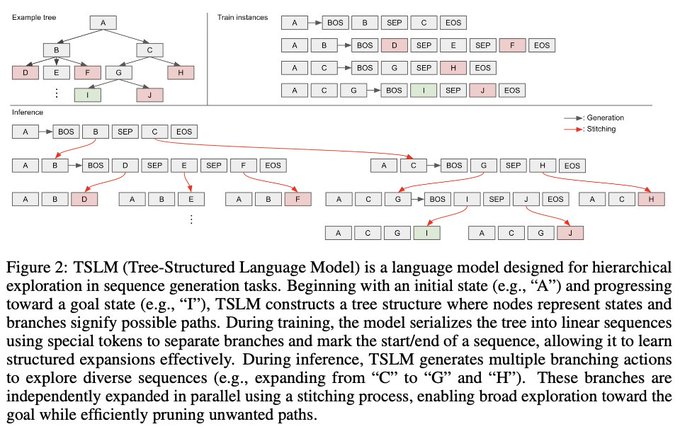
Doyoung Kim*, Jaehyeok Doo*, Minjoon Seo ICLR 2026 [paper] We propose Tree Structured Language Modeling (TSLM), a new paradigm that enables language models to generate complete search trees using special tokens rather than sequential reasoning. TSLM achieves efficient inference-time scaling by producing divergent reasoning paths in a single forward pass.
LLMs
Reasoning
|
|
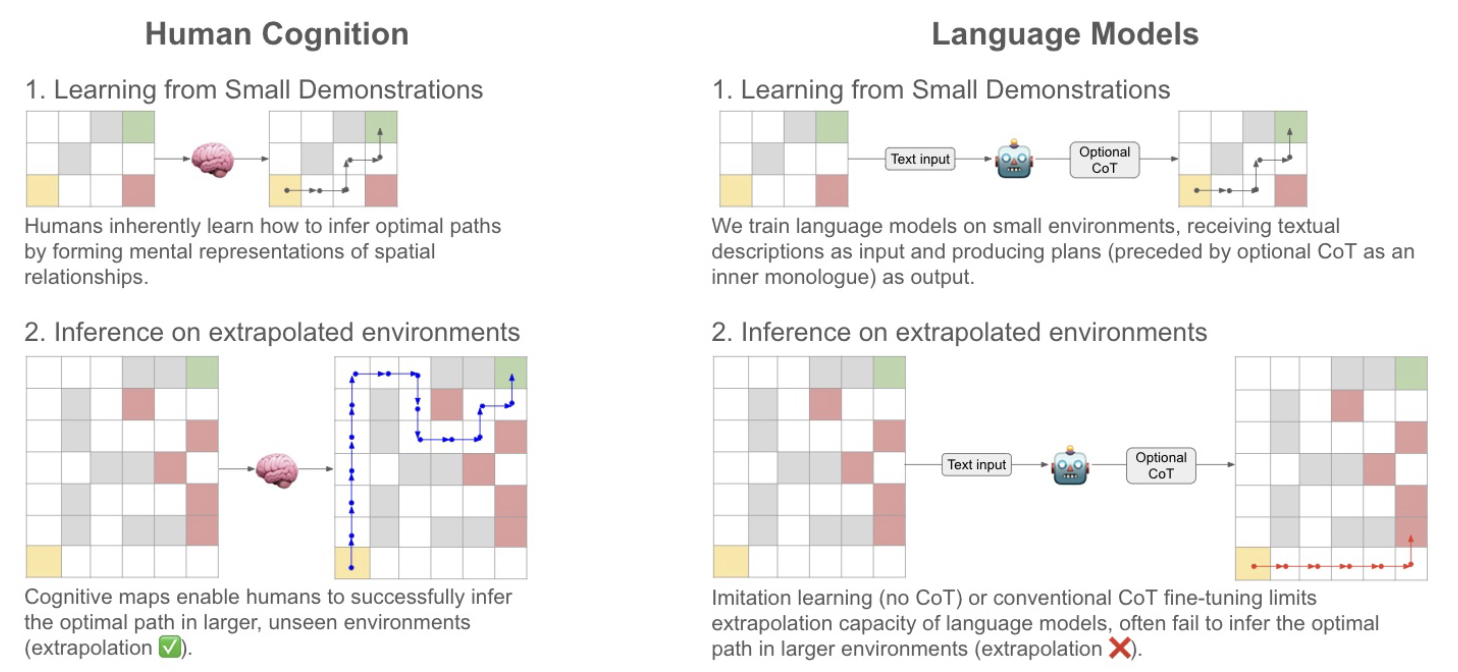
Doyoung Kim, Jongwon Lee, Jinho Park, Minjoon Seo Neurips 2024 Compositional Learning Workshop [paper] [blog] While humans can learn complex reasoning from few examples, AI struggles to generalize beyond its training. We enable language models to generate "cognitive maps" - tree-structured expansions of future states - before planning. In maze-solving tasks, this cognitive mapping approach proves to be the only effective method for helping language models extrapolate their planning abilities to larger, unseen mazes.
LLMs
Generalization
Reasoning
|
|
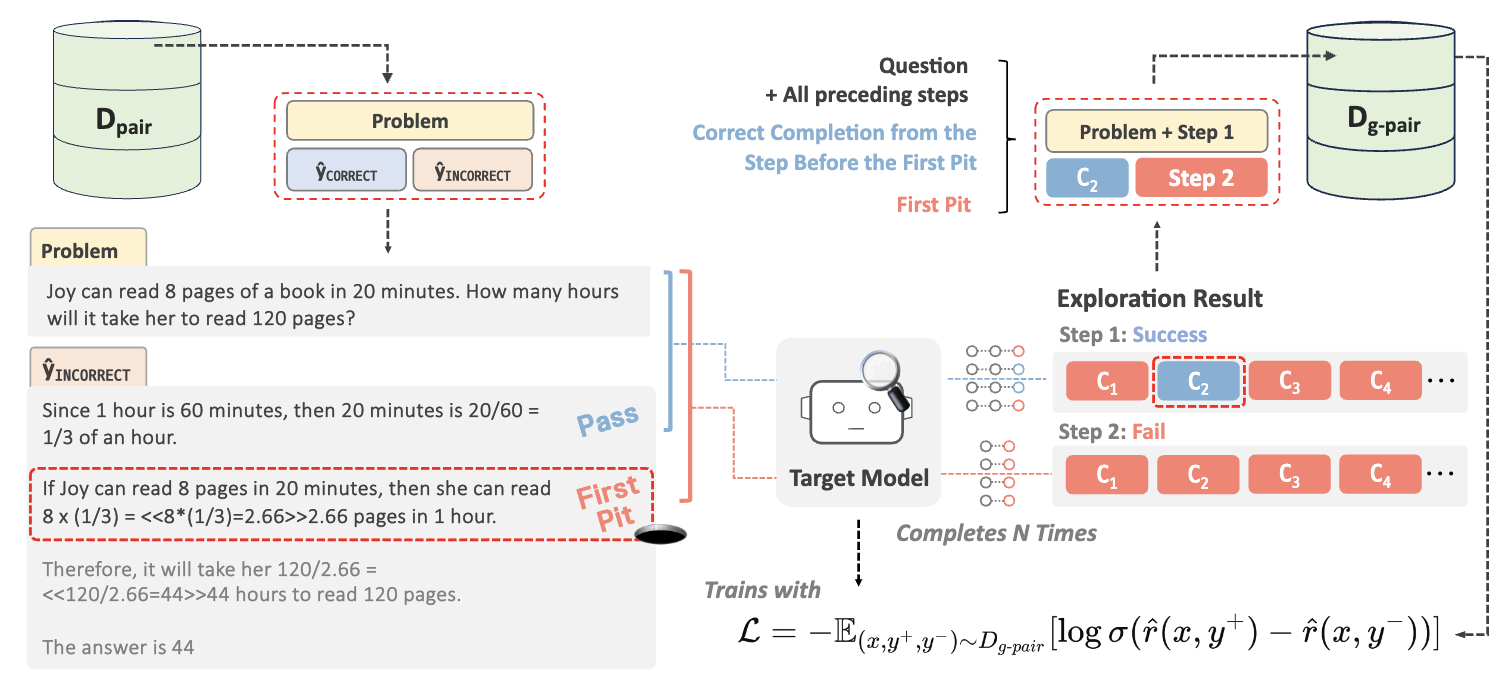
Hyeonbin Hwang, Doyoung Kim, Seungone Kim, Seonghyeon Ye, Minjoon Seo EMNLP 2024 Findings [paper] We propose a self-training method that helps LLMs identify their first incorrect reasoning step ("pit") and use it as a reward signal. Through preference optimization, this method enables LLMs to improve their reasoning process, leading to enhanced mathematical performance.
LLMs
Reasoning
Reinforcement Learning
|
|
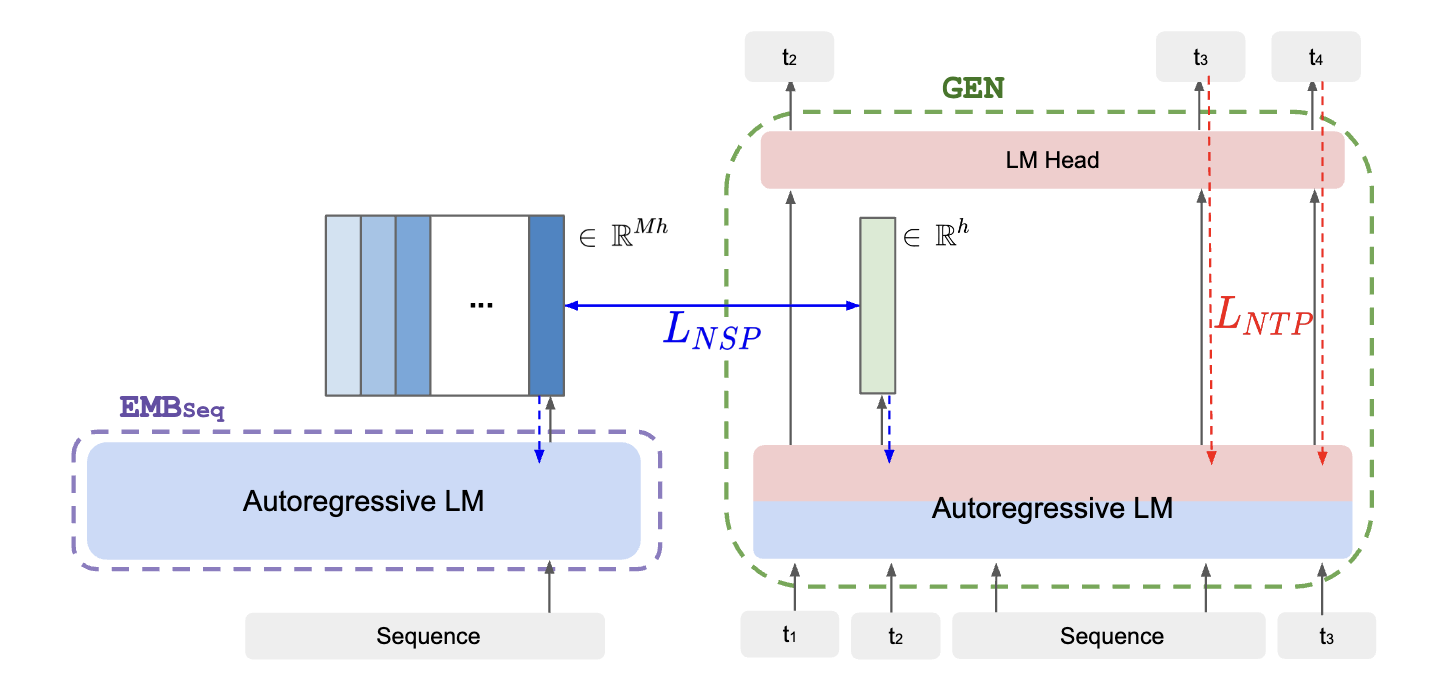
Hyunji Lee*, Doyoung Kim*, Jihoon Jun, Sejune Joo, Joel Jang, Kyoung-Woon On, Minjoon Seo ACL 2024 [paper] We introduce a semiparametric model superposing two embedding spaces: parametric token embeddings and nonparametric sequence embeddings. The model is co-trained using weighted cross-entropy loss for language modeling and InfoNCE loss for sequence retrieval to enable generation with citations.
LLMs
Retrieval
Representation Learning
|
|
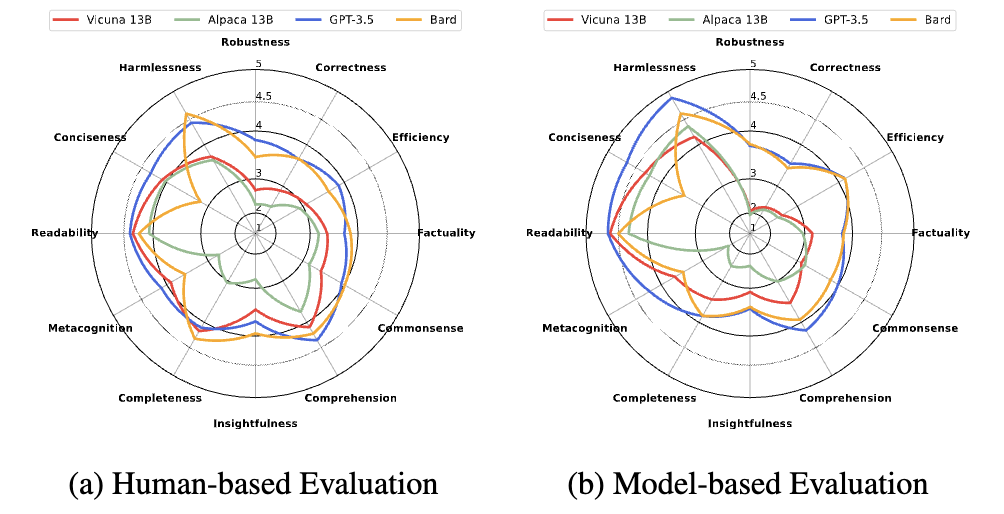
Seonghyeon Ye*, Doyoung Kim*, Sungdong Kim, Hyeonbin Hwang, Seungone Kim, James Thorne, Juho Kim, Minjoon Seo ICLR 2024 Spotlight [paper] We propose a fine-grained evaluation framework for generative language models based on 12 alignment skill sets, which show a strong correlation between model-based and human-based evaluations.
LLMs
Evaluation
Alignment
|
|
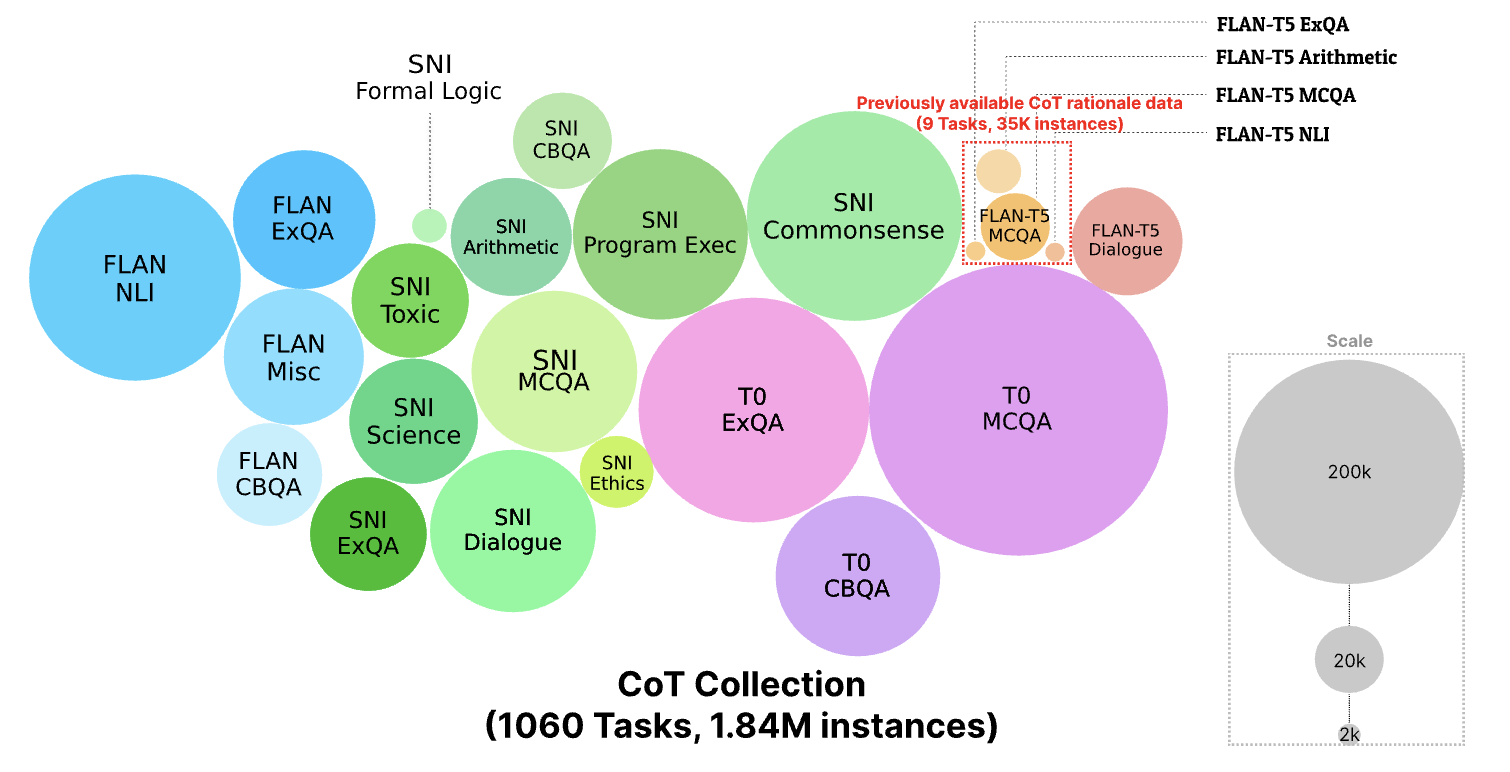
Seungone Kim, Sejune Joo, Doyoung Kim, Joel Jang, Seonghyeon Ye, Jamin Shin, Minjoon Seo EMNLP 2023 [paper] We introduce a new instruction-tuning dataset called the COT COLLECTION dataset, containing 1.84 million rationales across 1,060 tasks. These rationales were extracted from the FLAN Collection using OpenAI Codex with in-context learning (ICL). We fine-tune Flan-T5 (3B & 11B) with the COT COLLECTION to show both zero-shot and few-shot improvements.
LLMs
Reasoning
Few-shot Learning
|
|
Show All Publications |
|
|
* denotes equal contribution. |
|
|
Seonghyeon Ye*, Yongrae Jo*, Doyoung Kim*, Sungdong Kim, Hyeonbin Hwang, Minjoon Seo [blog]
LLMs
Self-Improvement
|
|
Website design from Jon Barron |